More Than a Username: The Real Bonds Formed Inside Gaming Communities
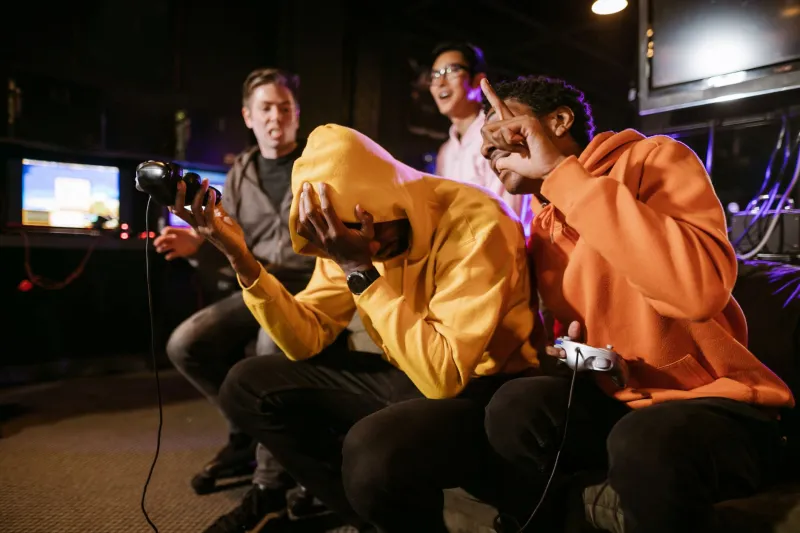
Ask Marcus from Denver why he still logs into his favorite gaming platform three nights a week, and he won't start with the games. He'll start with the group chat.
"There's like twelve of us now," he says. "We started as randoms in the same tournament lobby, and now we've got a Discord, we've met up twice in real life, and one of the guys was at my wedding last fall."
That's not an unusual story. In fact, if you spend any time inside active gaming communities, you'll hear variations of it constantly. The games are the entry point. The people are the reason you stay.
How Gaming Platforms Became Unexpected Social Spaces
The stereotype of the isolated gamer — headphones on, world tuned out — has been outdated for a long time. The reality of modern online gaming, especially on community-driven platforms, looks a lot more like a neighborhood bar than a solo activity. People show up for the game, sure. But they stay for the conversation, the shared experience, and the sense of belonging that comes from being part of something regular.
Platforms that understand this have built features specifically designed to foster connection — not just competition. Persistent guilds and squads, community leaderboards that reward group participation, in-platform messaging, and social feeds that highlight player milestones all serve the same underlying function: they give people reasons to interact beyond the game itself.
At TaixiuGo88, the community side of the platform is something players genuinely invest in. You'll find regulars who know each other's playing styles, who hype each other up before big tournament entries, and who are just as likely to share a meme as they are a strategy tip.
The Guild Effect: Belonging at Scale
There's something specific that happens when you join a guild or a squad. It's not just that you have a team — it's that you have a role. You're the one who always scouts new tournament formats, or the one who keeps the group's morale up when things go sideways, or the one who's been around long enough to mentor the newer members.
That sense of defined identity within a group is psychologically powerful. Research on community belonging consistently shows that people who feel they have a recognized role in a social group report higher levels of satisfaction and lower levels of anxiety. Gaming communities, almost accidentally, have built structures that deliver exactly this.
For players who might struggle to find that kind of social footing in their day-to-day lives — whether due to geography, social anxiety, or just busy adult schedules that leave little time for traditional socializing — a gaming guild can be a genuinely meaningful social anchor.
Real Stories, Real Connections
Jamila, a 29-year-old from Atlanta, started playing competitively about three years ago, mostly as a way to decompress after work. "I wasn't really looking to make friends," she admits. "I just wanted something that was mine, you know? Something that had nothing to do with my job or my family obligations."
Six months in, she found herself in a tight-knit group of players who happened to share her schedule — late evenings, weekends, the occasional lunch break session. They started a group chat. Then a voice channel. Then a tradition of doing a recap call after every major tournament.
"These are people I talk to almost every day," she says. "Two of them have helped me through some genuinely hard stuff. One of them talked me through a really rough patch at work last year. That's not nothing. That's real."
Stories like Jamila's are common because the conditions that create them are baked into how gaming communities function. Shared stakes, repeated interaction, and a common language (both literal and figurative) are exactly the ingredients social science identifies as essential for deep friendship formation.
The Mental Health Angle Nobody Talks About Enough
Let's be direct about something: loneliness is a serious issue in the US right now. The surgeon general has called it an epidemic. Rates of social isolation, particularly among adults in their 20s and 30s, have climbed steadily over the past decade.
Gaming communities aren't a cure. But they are, for a lot of people, a genuine source of regular human connection that might not exist otherwise. The consistency matters — showing up to the same platform, with the same group, on a regular schedule creates the kind of low-pressure, repeated social contact that researchers identify as the foundation of real friendship.
And unlike a lot of social environments, gaming communities tend to be judgment-free about the things that often create social friction in real life — income, appearance, career status. What you bring to the table in a gaming community is your personality, your play style, and your willingness to show up. That's a surprisingly level playing field.
How to Actually Build Your Community, Not Just Join One
Finding your people inside a gaming platform isn't always automatic. Here are a few things that actually work:
Show up consistently. Regularity matters more than skill level when it comes to forming connections. Being a familiar face (or username) builds trust faster than you'd think.
Contribute beyond the game. Share tips, hype other players' wins, engage in the community spaces that aren't directly tied to active play. The social layer is where friendships actually form.
Be the person who reaches out. Most people are waiting for someone else to start the conversation. Don't be that person. If you enjoy playing with someone, say so. Invite them to your next session. It's less awkward than it sounds.
Find a guild that fits your vibe, not just your skill level. A community that matches your personality and schedule is going to do more for you long-term than one that's just highly ranked.
The games are great. The wins feel good. But the friendships? Those are the part that lasts.